Shadow Beings
Also known as: Shadow People, Hat Man
- First known report
- No single founding case; the type surfaces throughout the abduction and sleep-paralysis literature from the 1980s onward as investigators noticed a subset of 'bedroom visitor' reports where witnesses described darkness rather than a defined Grey or hybrid face — most visibly discussed in Whitley Strieber's later writing and in clinical sleep-paralysis research that began cataloguing the imagery independently of ufology.
- Relative frequency
- occasional as a distinct report type, and likely under-counted since many witnesses fold the experience into a generic 'Grey' or 'demon' description depending on which cultural frame they reach for first
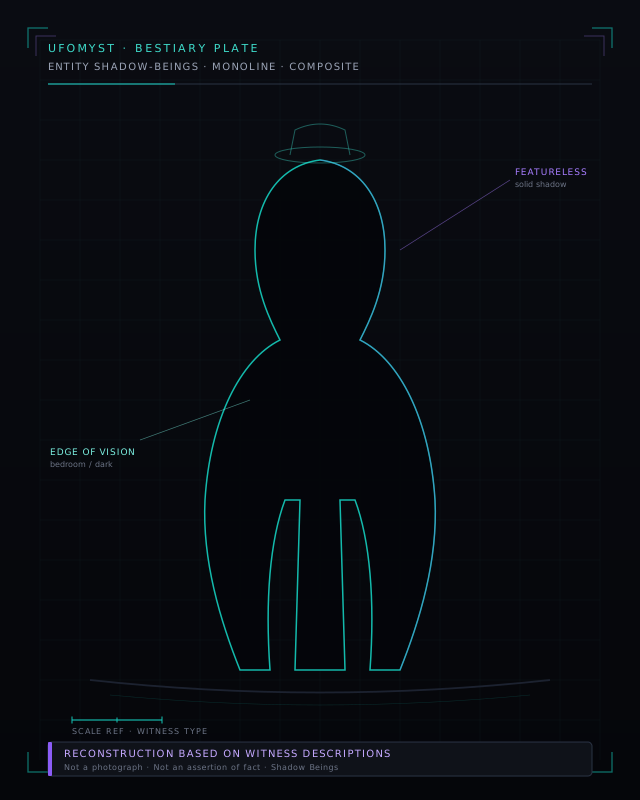
Reconstruction based on witness descriptions
Physical description
Featureless, wholly black or dark-grey humanoid silhouettes, usually seen at the edge of vision or in a darkened bedroom, often described as 'more solid than a shadow but with no visible texture.' A recurring subtype nicknamed 'Hat Man' adds a wide-brimmed hat to the outline. Encounters are almost always brief, occur at the threshold of sleep, and are accompanied by dread and an inability to move.
Skeptical reading
Sleep researchers treat the Shadow Being as one of the most consistent hallucinatory figures worldwide, produced during REM-intrusion sleep paralysis when the brain's threat-detection and body-schema systems misfire while voluntary movement stays offline — the same neurology proposed for the classic Grey 'intruder.' Susan Clancy's abductee-as-control-group research and Carl Sagan's demon-continuity argument both treat the type as the clearest case where a purely internal neurological event gets externalized and given a costume by whatever a witness's culture supplies — succubus, incubus, Old Hag, or Shadow Man.