Chupacabra
Also known as: Goatsucker, El Chupacabras
- First known report
- Canóvanas and Orocovis, Puerto Rico, March 1995 — the first wave of livestock deaths and the coining of the name 'chupacabra' ('goat-sucker'). The phenomenon spread through Latin America and the U.S. Southwest within two years, adopting the canine form after several roadkill 'specimens' were photographed.
- Relative frequency
- rare as a UFO-linked entity specifically, though enormous as a standalone cryptid — many chupacabra reports carry no craft sighting at all, placing the type at ufology's border with cryptozoology
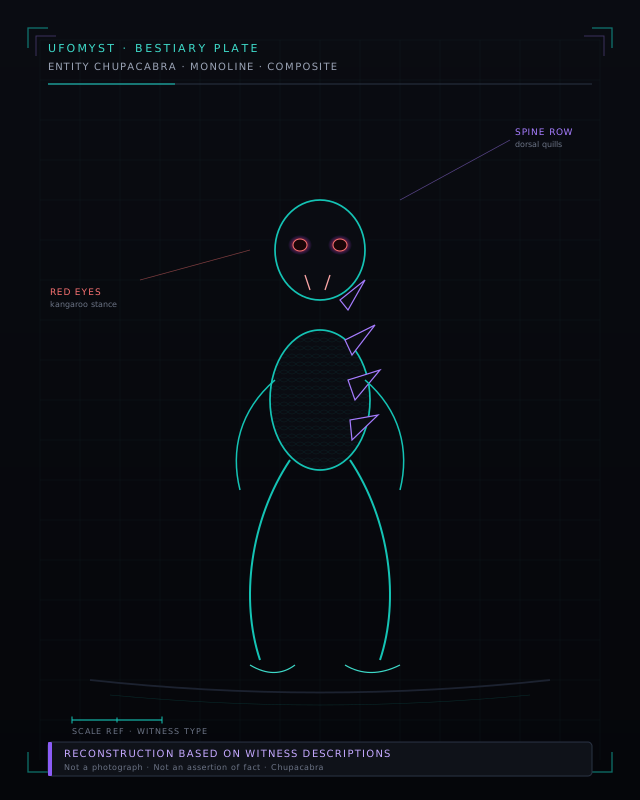
Reconstruction based on witness descriptions
Physical description
Described in two competing forms: an early-1990s reptilian biped (roughly 1 m, spines down the back, glowing red eyes, kangaroo-like hind legs) and a later, more common canine/coyote-like quadruped form with patchy or absent hair, protruding ribs, and elongated fangs. Both forms are tied almost exclusively to livestock kills — goats, chickens, and rabbits found drained of blood through small, precise puncture wounds rather than the torn wounds of a natural predator.
Skeptical reading
Every physical 'chupacabra' specimen recovered and DNA-tested — in Texas, Nicaragua, and Puerto Rico — has come back as a coyote, dog, or raccoon with severe sarcoptic mange, which causes hair loss, emaciation, and thickened, discolored skin that reads as 'alien' at a glance. The bite-wound pattern is consistent with ordinary predators; the 'no blood' claim is a known misreading, since coagulated wounds show less visible blood than fresh kills. The UFO tie-in (rather than a purely cryptid one) reflects 1990s cross-pollination between Latin American ufology and the emerging cable-television paranormal genre.