Mantids
Also known as: Insectoids, Mantis Beings, Praying Mantis Aliens
- First known report
- Isolated insectoid descriptions appear in 1950s-60s South American cases; the type crystallized through Betty Andreasson's January 1967 South Ashburnham, Massachusetts encounter (documented under hypnosis by Raymond Fowler from 1977) and was systematized in the late-1980s abduction literature by Budd Hopkins and David Jacobs.
- Relative frequency
- occasional — reported almost exclusively inside abduction narratives recovered under hypnosis, rarely in outdoor daylight CE3 sightings
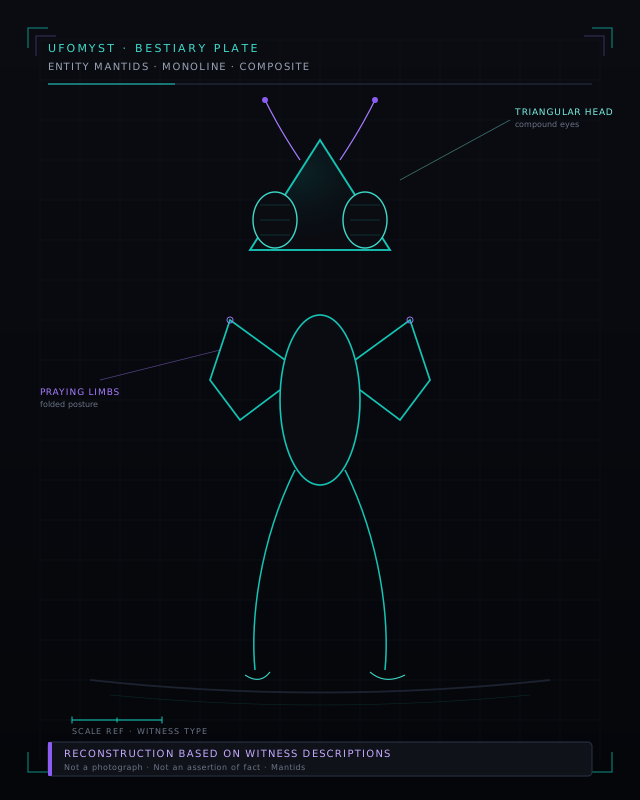
Reconstruction based on witness descriptions
Physical description
Very tall (2-2.5 m) insect-like figures with triangular heads, huge lateral compound-looking eyes, elongated segmented limbs held in a folded 'praying' posture, and a thin, exoskeleton-like carapace over the torso. In abduction accounts they appear as calm supervisors directing Grey 'workers' and smaller insectoid staff, communicating telepathically and radiating what abductees often describe as an unsettling, non-human patience.
Skeptical reading
Mantids emerge almost entirely from hypnotic regression sessions conducted by a small circle of investigators, making cross-contamination between cases the parsimonious explanation. The 'giant insect' is also a stock figure of 1950s science-fiction cinema and of DMT/entheogen trip reports, suggesting a shared neurocultural template — the human brain's stock library of 'alien' shapes — rather than a shared external visitor.
Famous cases
- betty-andreasson-1967