Small Humanoids / Goblins
Also known as: Imps, Dwarfs, Little Men, Duendes (Latin America)
- First known report
- Deep folkloric roots (fairies, duendes, kobolds) predate the UFO era by centuries; in modern ufology, the 1954 French wave (Quarouble, Cussac, and dozens more) and the Kelly-Hopkinsville siege (Kentucky, August 21-22, 1955) define the type.
- Relative frequency
- common in 1950s-70s Europe and Latin America; the dominant pre-Grey occupant type worldwide
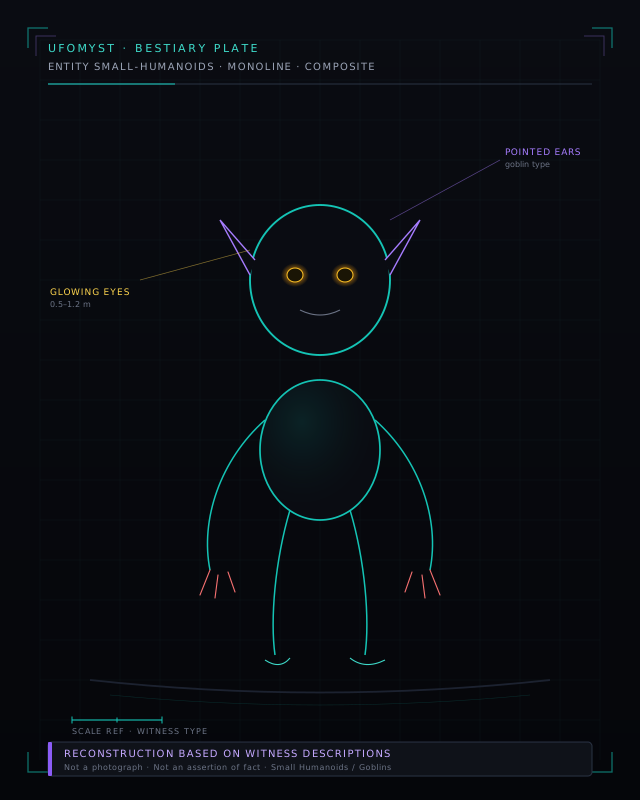
Reconstruction based on witness descriptions
Physical description
Diminutive beings (0.5-1.2 m) that are neither Greys nor children: oversized heads and pointed ears, glowing or reflective eyes, spindly limbs, sometimes claws. The Hopkinsville type 'floated' and seemed weightless, shrugging off point-blank shotgun fire; the 1954 French wave's dwarfs sometimes wore diving suits or armor (see that entry); Emilcin's Poland-1978 beings were reported with green-tinged faces and offered the witness food.
Skeptical reading
For Hopkinsville, the standard explanation is a pair of territorial great horned owls seen by an excited, armed household at night — an explanation that fits the silver glow, the claws, and the 'floating' hop. More broadly, Jacques Vallée argued in 'Passport to Magonia' (1969) that the little humanoid IS the fairy of folklore in modern dress — a continuity skeptics read as a shared cultural template, and Vallée read as evidence of one enduring phenomenon changing costume across centuries.
Famous cases
- kelly-hopkinsville-1955
- quarouble-1954
- cussac-1967
- emilcin-abduction-1978