Suited Dwarfs (1954 French type)
Also known as: Scaphandre Occupants, Diving-Suit Beings
- First known report
- Marius Dewilde at Quarouble, France (September 10, 1954) — two small suited figures beside a dark object on railway tracks; part of the densest occupant wave ever recorded (hundreds of French CE3s inside ten weeks).
- Relative frequency
- common in the 1954-1968 European and Latin American record; faded as the Grey standardized after 1975
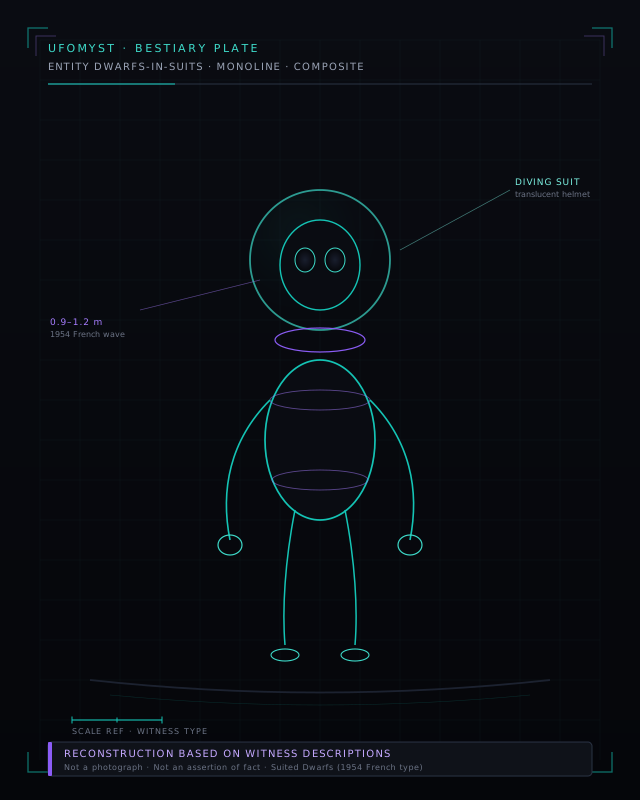
Reconstruction based on witness descriptions
Physical description
Short beings (0.9-1.2 m) sealed in one-piece 'diving suits' or translucent helmets, often with visible dark faces or large eyes behind visors; associated with landed domed craft, paralysis beams, and hasty departures when approached. Socorro's two small figures were reported in unusually clean white coveralls rather than the darker scaphandre style of the French wave.
Skeptical reading
The suits are the tell, say skeptics: 1954 occupants wore exactly what 1954 humans imagined space explorers would wear (scaphandres straight from pulp-magazine covers), just as 1890s 'mystery airship' pilots wore ordinary overalls and top hats. The type's disappearance after the 1970s tracks the culture's shift, not the visitors'. Believers counter that the French wave's geographic pattern — isolated rural witnesses, consistent detail, pre-media saturation — resists a simple copycat explanation; Vallée and Aimé Michel both built their early careers on that pattern (Michel's 'orthoteny' straight-line hypothesis among them).
Famous cases
- quarouble-1954
- valensole-1965
- socorro-1964